Walmart

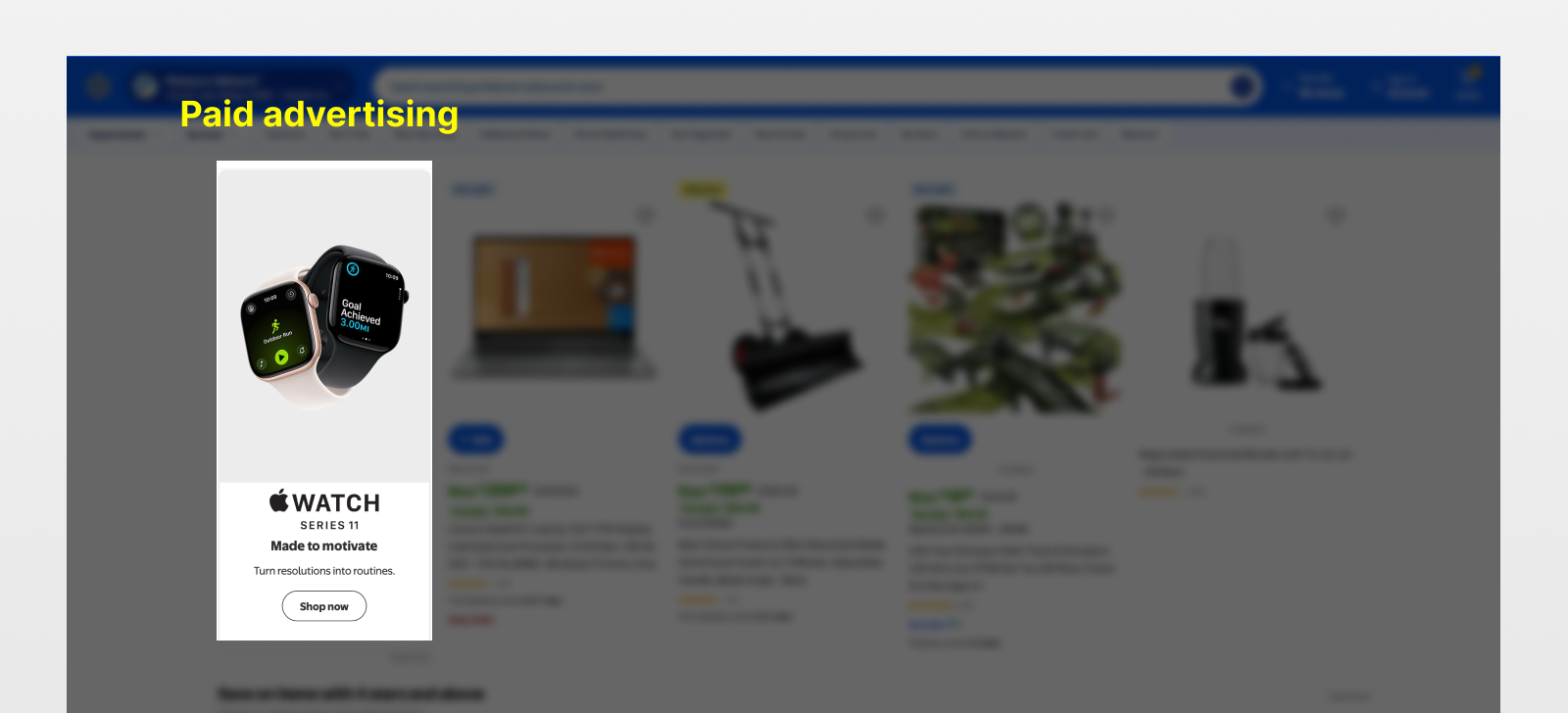
Product Design Tile Takeover

Discover

Background

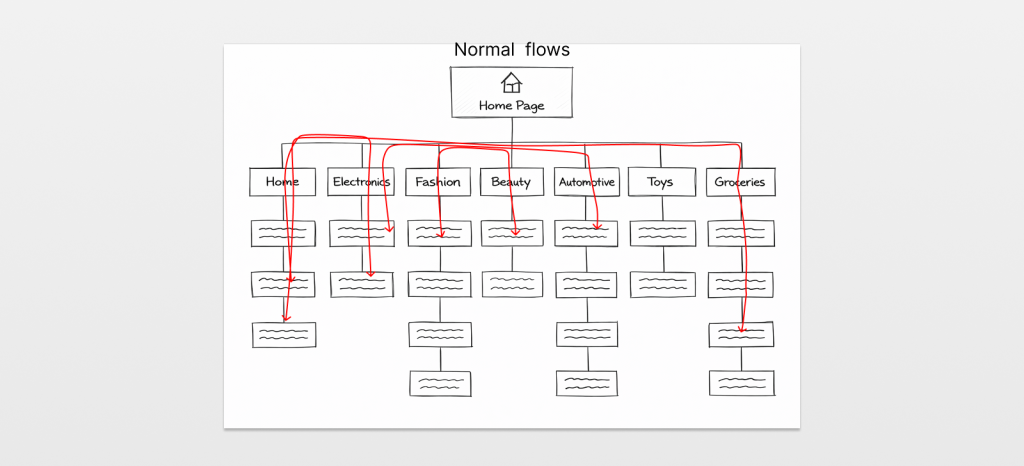
During my time at Walmart, I spent years observing how customers navigated category and product listing pages—the digital equivalent of store aisles. These experiences were highly structured but often acted as dead ends, requiring customers to restart their journey to explore adjacent categories. 

At the same time, these high-traffic surfaces represented some of the most valuable real estate in the customer journey, yet offered limited opportunities for cross-merchandising or contextual discovery beyond standard product listings.

Date: 2018

My Role: Head of Design, Walmart.com

Contributions: Led UX & Product Design Execution overseeing designers and partnering with stakeholders

The Problem

Product grids were optimized for browsing within a category, but not for discovery across categories—limiting the ability to introduce relevant products at key decision-making moments.

How might we transform product grid experiences into flexible, contextual surfaces that enable cross-merchandising and new revenue opportunities without disrupting the core shopping experience?

Approach

I approached this as both a customer experience and business opportunity—framing the concept around unlocking new value within an existing, high-traffic surface.

Early work focused on identifying key decision points across the shopping journey and where intervention could feel helpful rather than disruptive. The goal was to introduce a system that could dynamically “take over” product tiles with relevant content, enabling discovery while maintaining the integrity of the browsing experience.

Research Methods
  • I mapped user navigation patterns across category and product listing pages
  • I identified high-value decision points within the customer journey
  • I partnered with analytics and category leadership to quantify opportunity
  • I explored cross-merchandising scenarios across categories and verticals
Constraints, Risks & Blind Spots
  • Risk of disrupting core browsing behavior with intrusive content
  • Balancing commercial opportunity with customer experience
  • Organizational alignment across category teams and leadership
  • Ensuring relevance to avoid appearing as generic advertising

Design

Ideate

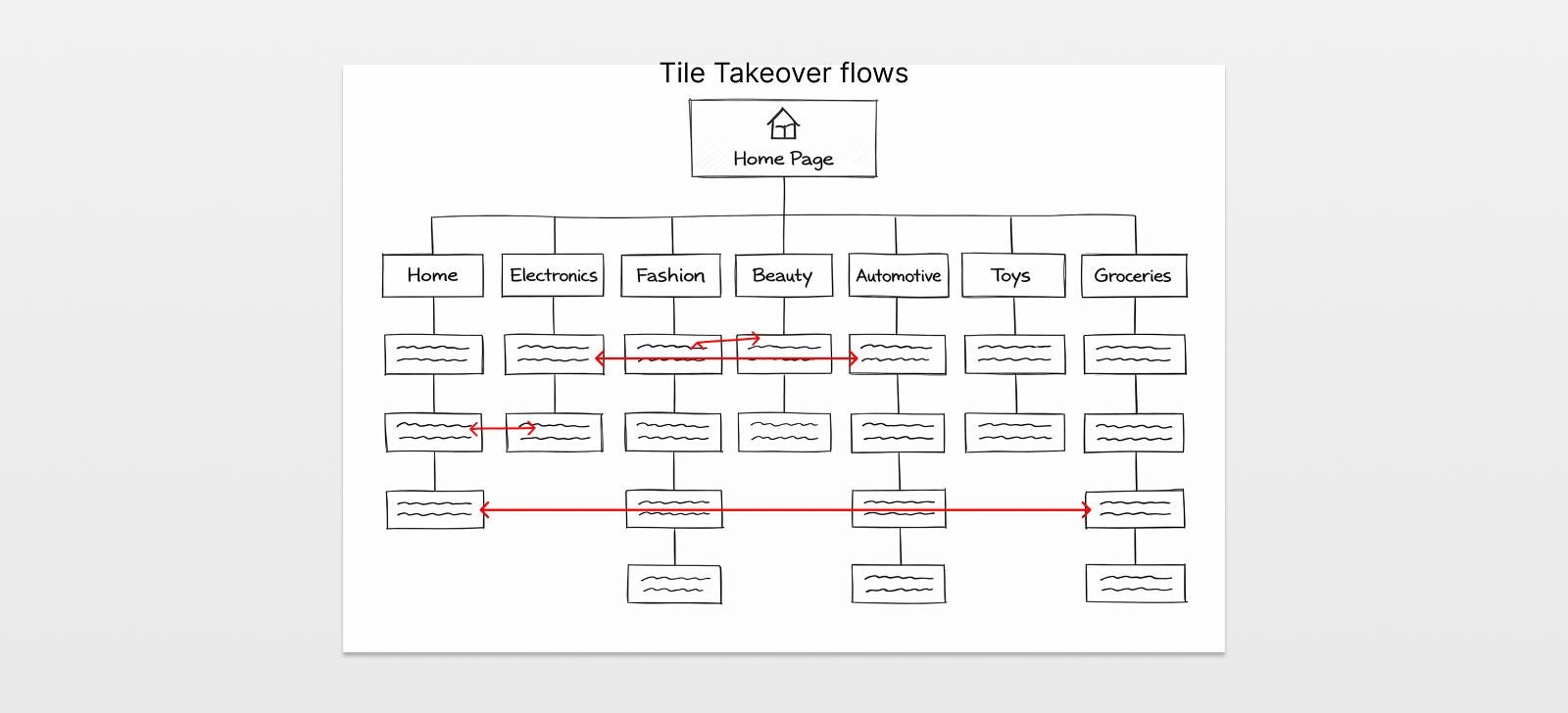
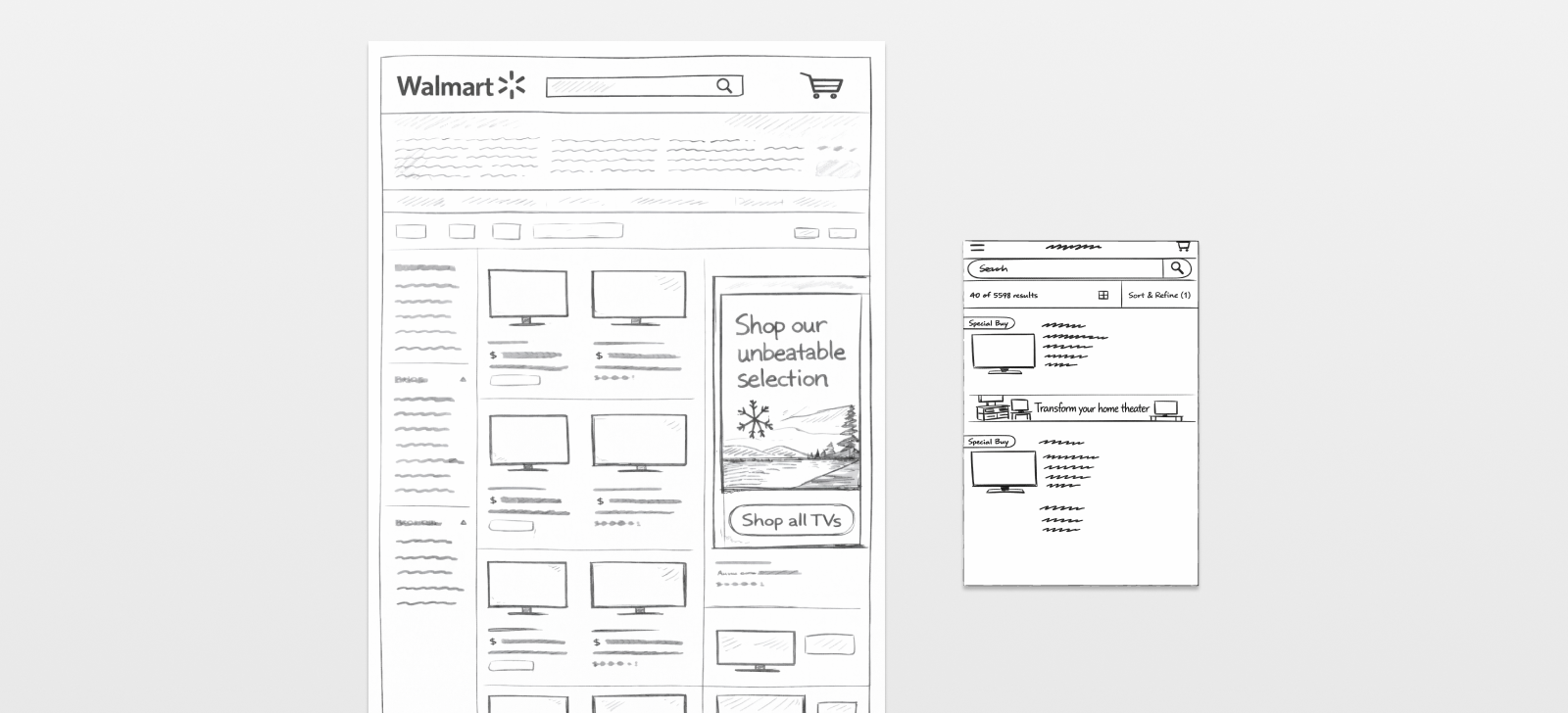
I led the concept development—defining how individual product tiles could dynamically shift from standard product listings to contextual content surfaces.

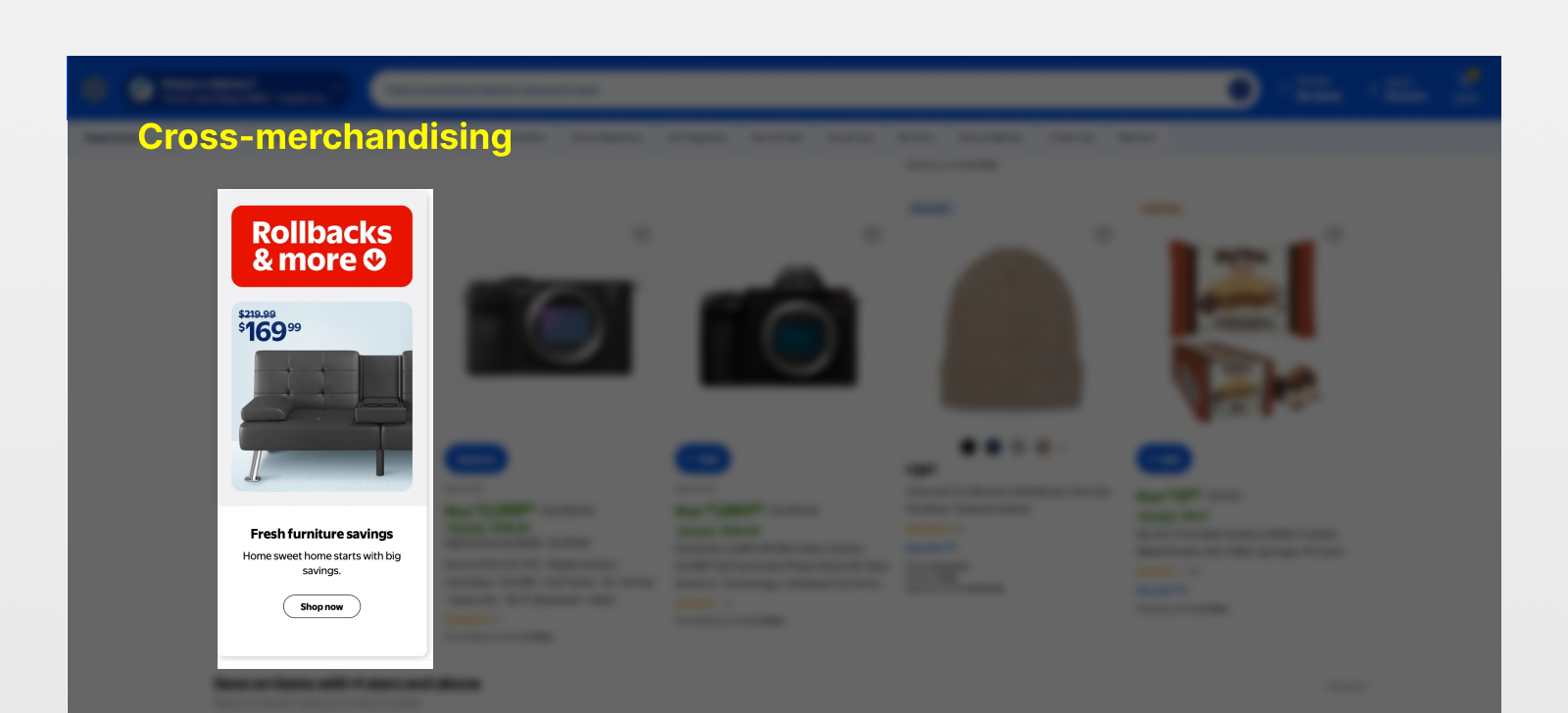
The team explored how these “tile takeovers” could introduce relevant products, messaging, or cross-category recommendations in a way that felt native to the experience rather than interruptive.

Prototype

Concepts were translated into flows and visual frameworks that demonstrated how the system would function across different categories and use cases.

These artifacts were used to communicate the vision clearly to stakeholders—helping align business, product, and design leadership around both the opportunity and the execution model.

Develop

Test

Validation focused on how and where takeovers could appear without disrupting the core shopping experience, ensuring the concept felt additive rather than intrusive.

Iterate

The concept evolved through stakeholder feedback, refining placement, timing, and relevance to better align with both customer behavior and business goals.

Implementation

While the concept required broader organizational alignment, the work laid the foundation for roadmap inclusion—defining the system, rules, and use cases needed to bring the experience to life at scale.

Findings

Results
  • Concept adopted into Walmart’s product roadmap following initial pitch
  • Eventually launched across Walmart.com within category and shelf experiences
  • Introduced a new surface for cross-merchandising and contextual discovery
Learnings

High-value opportunities often exist within existing surfaces—unlocking them requires rethinking how those surfaces function, not replacing them.

Strong concepts need to balance customer experience with business impact to gain traction across large organizations.

Opportunities
  • Expand dynamic tile behavior with personalization and real-time data
  • Increase relevance through deeper integration with user behavior and intent
  • Extend the system across additional surfaces beyond category pages
  • Continue refining balance between discovery and disruption