
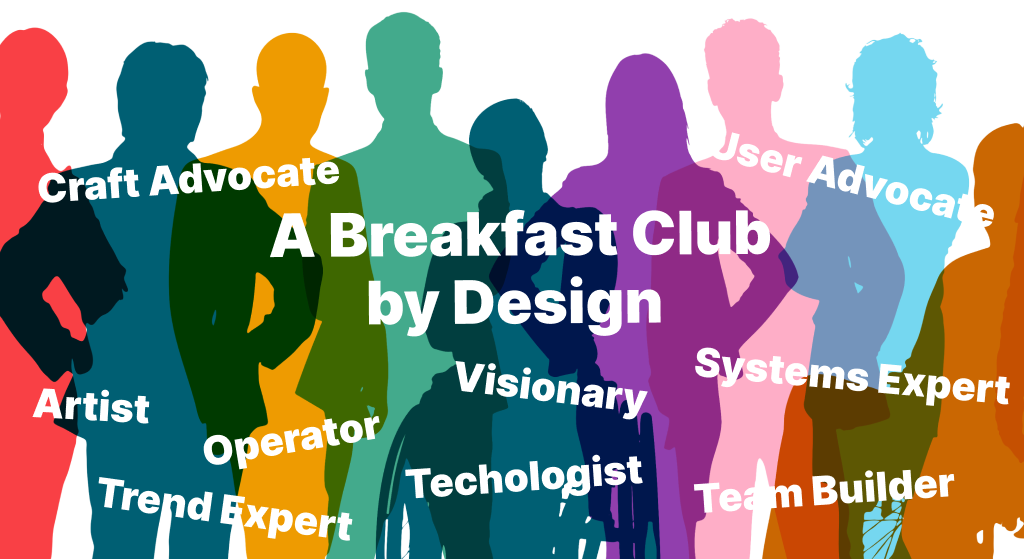
“You see us as you want to see us… in the simplest terms, with the most convenient definitions.”
— The Breakfast Club
In many organizations, hiring designers isn’t very different.
Candidates are evaluated primarily through their portfolios. Leaders look for strong projects, polished visuals, and evidence of impact. And while those things matter, the evaluation often stops there. A portfolio is an incredibly useful tool for understanding how someone thinks, how they approach problems, and what kind of craft they bring to the table. But portfolios also encourage a very specific kind of hiring decision — one focused almost entirely on the individual.
What rarely gets asked is a different question:
How will this person change the shape of the team?
When I evaluate potential hires, I’m thinking about more than whether they’ve done impressive work. I’m also thinking about how they might augment the group that already exists.
Are they exceptional with layout and typography?
Do they push motion and interaction forward?
Are they deeply analytical and comfortable with metrics?
Are they strong problem framers who challenge assumptions?
Most organizations hire based on individual output.
But the strongest design teams are built by thinking about how people complement one another.
A great portfolio tells you what someone has done.
It doesn’t necessarily tell you what your team is missing.
When a new design role opens up, the instinct is usually straightforward: find the strongest candidate possible. That sounds reasonable on the surface, but “strong” can mean very different things depending on what a team actually needs.
One designer might elevate visual craft across the organization. Another might bring clarity to complex systems and information architecture. Another might be exceptional at navigating ambiguity and reframing product problems.
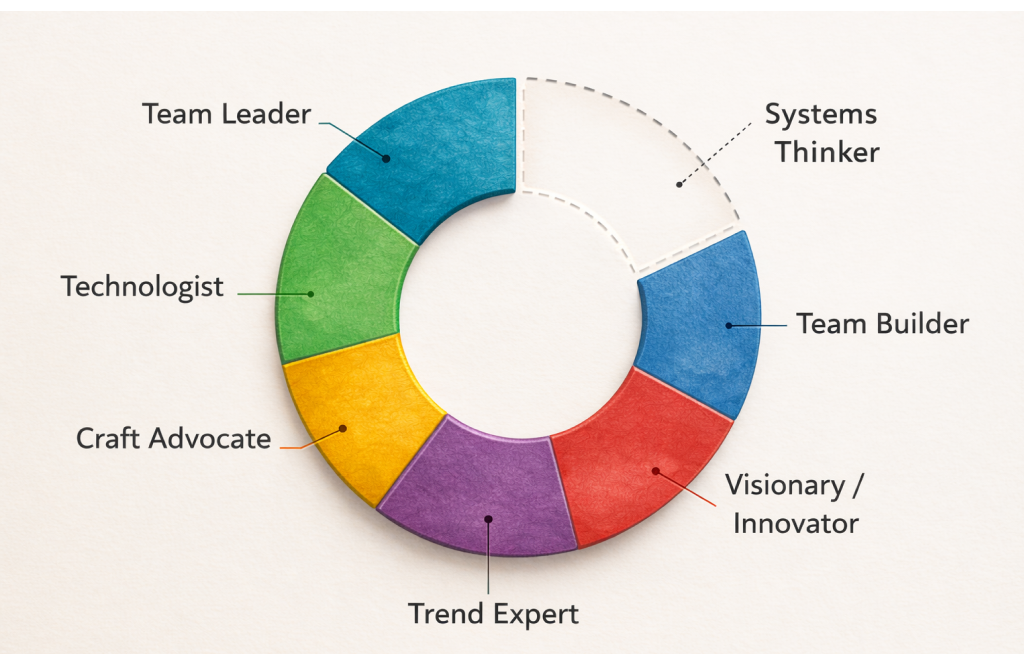
If you hire five leaders with the same instincts, the team eventually becomes lopsided — not because people aren’t talented, but because the range of thinking is too narrow.
Many teams unintentionally end up with leadership benches that look like this:
All talented. All capable.
But collectively missing a range of perspectives.
The best design organizations avoid this trap by thinking about hiring not just as adding talent, but as balancing perspectives.
Over time, I started thinking about building design leadership teams in a way that reminds me of The Breakfast Club.
In the movie, the characters begin as stereotypes — the brain, the athlete, the rebel. But the point of the story isn’t the labels. It’s what happens when different personalities and perspectives are forced into the same room.
They challenge each other.
They expose blind spots.
They learn from one another.
That dynamic is exactly what strong design leadership teams need.

Instead of hiring managers who all think alike, I try to assemble a group with different instincts and disciplines. Not just different personalities, but different lenses through which they see the work.
Every leadership team benefits from a range of perspectives around the table. These aren’t rigid roles, but they help illustrate the kinds of instincts that strengthen a design organization.
For example:
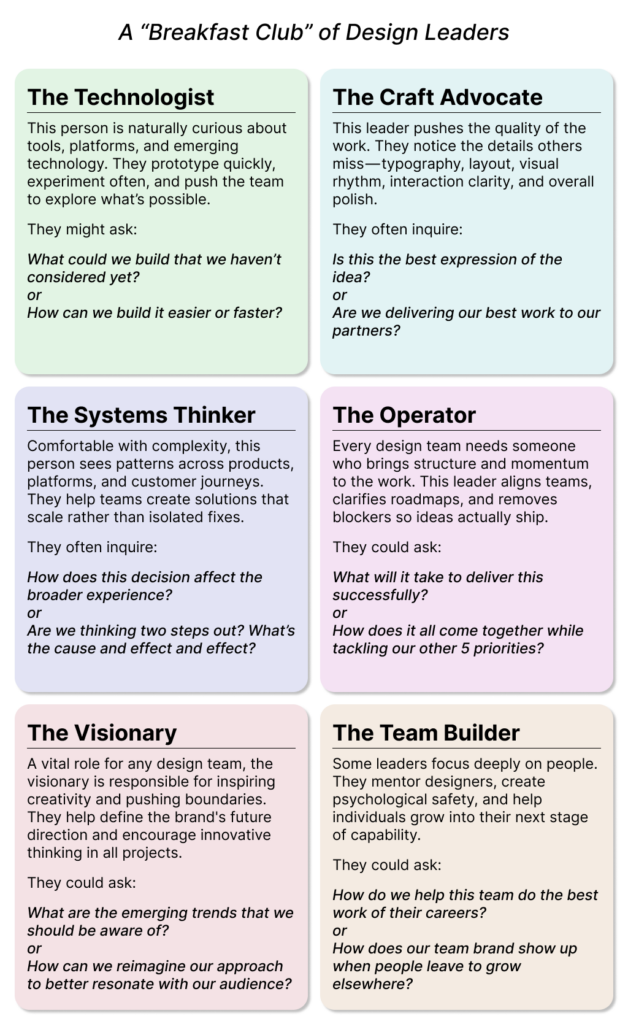
Of course, no one is just one thing.
Strong design leaders are usually capable across multiple areas. A technologist may also care deeply about craft. A systems thinker might be a phenomenal mentor. An operational leader may be excellent at recognizing talent and developing people.
Most experienced leaders bring a blend of these capabilities.
What you’re really identifying when hiring is where someone’s strongest instinct lives, and whether that instinct is something your team currently needs.
Everything else they bring with them is a bonus.
Or, to keep the breakfast theme going just briefly:
The strength you hire for is the coffee. Everything else they bring with it is the syrup on the pancakes.
It’s also important to say that these aren’t rigid classifications. They aren’t personality types, and they certainly aren’t boxes people get stuck in.
They’re simply a way of thinking about the kinds of perspectives that might be missing from a team at a given moment.
In one organization, the biggest need might be a technologist pushing experimentation and new tools. In another, it might be someone with strong operational instincts who can help a growing design team deliver consistently. In another environment entirely, the team may benefit most from an entrepreneurial leader who thrives in ambiguity and can help define entirely new products.
Sometimes the table needs:
The mix should evolve as the organization and needs evolve.
The goal isn’t to fill predefined roles. The goal is to notice what your team is missing and hire deliberately to bring that perspective into the room.
If this approach sounds obvious, it raises a natural question:
Why don’t more organizations build teams this way?
The answer is simple. Most hiring processes are optimized for individual evaluation, not team composition.
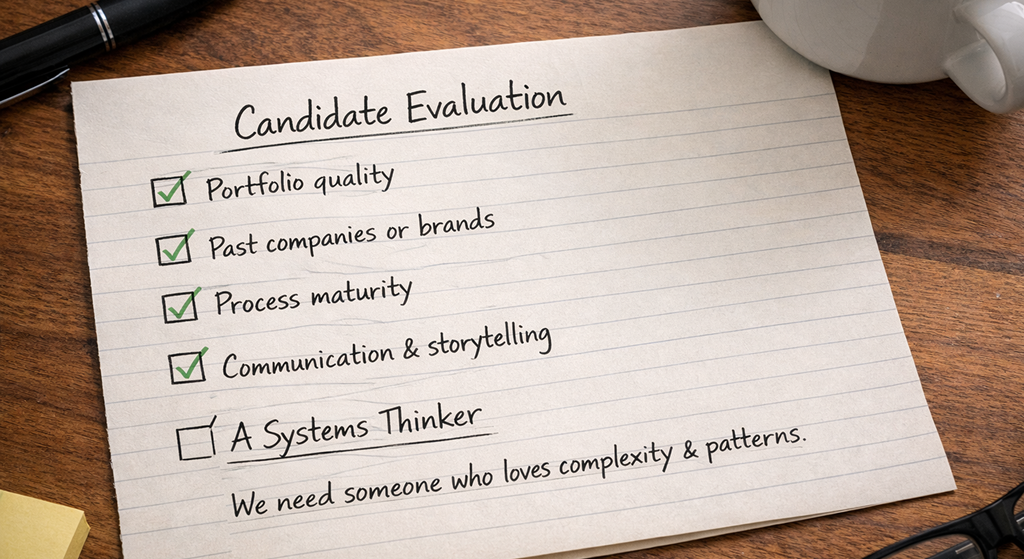
Hiring panels tend to focus on signals like:
All of which are useful signals.
But they don’t necessarily reveal the one thing that matters most when building a leadership bench:
What perspective will this person add to the room that isn’t already there?
Another subtle dynamic often appears as well. Leaders frequently hire people who resemble successful versions of themselves. It’s natural — we trust instincts and approaches that feel familiar.
But over time that tendency can produce teams where everyone thinks similarly, approaches problems the same way, and prioritizes the same aspects of design.
When that happens, blind spots grow quietly.
The best design organizations recognize that hiring isn’t just about bringing in great individuals. It’s about shaping the collective intelligence of the team.
When a leadership team is composed intentionally, something interesting happens in the room.
Different instincts surface during decision-making:
Each perspective challenges the others in productive ways. The conversations become richer. Blind spots surface earlier. And the result is almost always better decisions.
But something else happens over time.
People begin to learn from one another.
The technologist starts to think more about craft. The operator develops a stronger sense of systems. The visionary becomes more grounded in delivery realities. The craft advocate begins to appreciate technical constraints and opportunities.
No one stays confined to their starting strengths. Instead, the team becomes an environment where people expand their thinking, sharpen their instincts, and grow beyond their individual specialties.
And that’s when a leadership team stops being a collection of individuals and starts functioning as something more dynamic — a group of people who challenge, support, and elevate one another’s perspective.
Like the characters in The Breakfast Club, the most effective teams aren’t defined by a single label. They’re defined by what happens when different ways of thinking come together around the same table.